

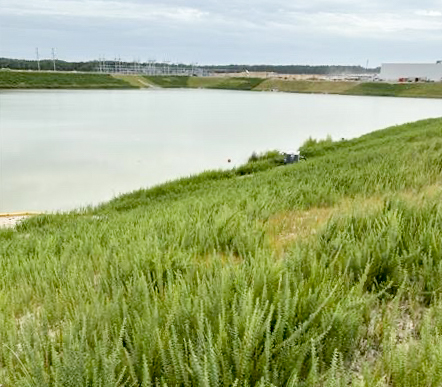

BLYTHEWOOD – Following extensive tree clearing that was difficult for residents to watch as graders scraped 1,100 acres of earth, Scout Motors officials say they are preparing to restore that landscape to rich biological diversity and ecological health.
As vertical construction of Scout’s manufacturing facilities nears completion, the company’s environmental leaders are beginning a phased planting program designed to bring native trees, shrubs, grasses and wildlife habitat back to the 1,100 acres surrounding the company’s manufacturing core.
In an exclusive interview with The Voice detailing the company’s immediate and long-range environmental master plan for landscaping the property, Jessica Siron, Senior Director of Environmental Health and Safety at Scout Motors, said Scout is executing a multi-tiered ecological framework designed to rebuild lost canopies, fortify remaining wetlands, and actively encourage the return of native wildlife and vegetation to the property.
“We know a lot about what this property was before we moved onto it, and it’s not going to go back to that exactly—after all, we put a factory in the middle of it,” Siron acknowledged candidly. “But what we can do is be supportive. We’re working toward creating regenerative green spaces, things that can be resilient to the ecosystem here, and also support whatever species we can. We don’t intend to take anything up; we intend to add to everything that’s there.”
Bringing Back the Birds
Central to Scout’s environmental strategy is bringing back the birds and wildlife. In collaboration with South Carolina-based ecological researchers, Scout completed two rigorous baseline biodiversity studies across the property prior to and during construction. Deploying automated acoustic machine listeners alongside field biologists, the team documented more than 70 native tree species and cataloged over 125 bird species navigating the Blythewood acreage.
“Among the most resilient feathered inhabitants already thriving on site,” Siron said, “is the killdeer, a ground-nesting plover known for its distinctive piercing call and ‘broken-wing’ antics used to lure predators away from camouflaged nests.”
But Siron stressed that the company’s long-term planting blueprint will include more than just survivors. The goal, she said, is to cultivate tailored microhabitats capable of sustaining species that require dense, mature cover, including the Carolina wren, forest songbirds, and migratory flocks that rely on shelter during seasonal stopovers.
“The killdeer, they’re everywhere; they like to be closer to the ground and enjoy low understory shrubs,” Siron explained. “But other birds need to be really high up, some want dense foliage, and some want sparse foliage. Having that data helps us cross-reference native plant species so that, by planting them, we are directly supporting the wildlife that will come back and live here as well as the wildlife that is moving through.”
5 Ecological Biomes
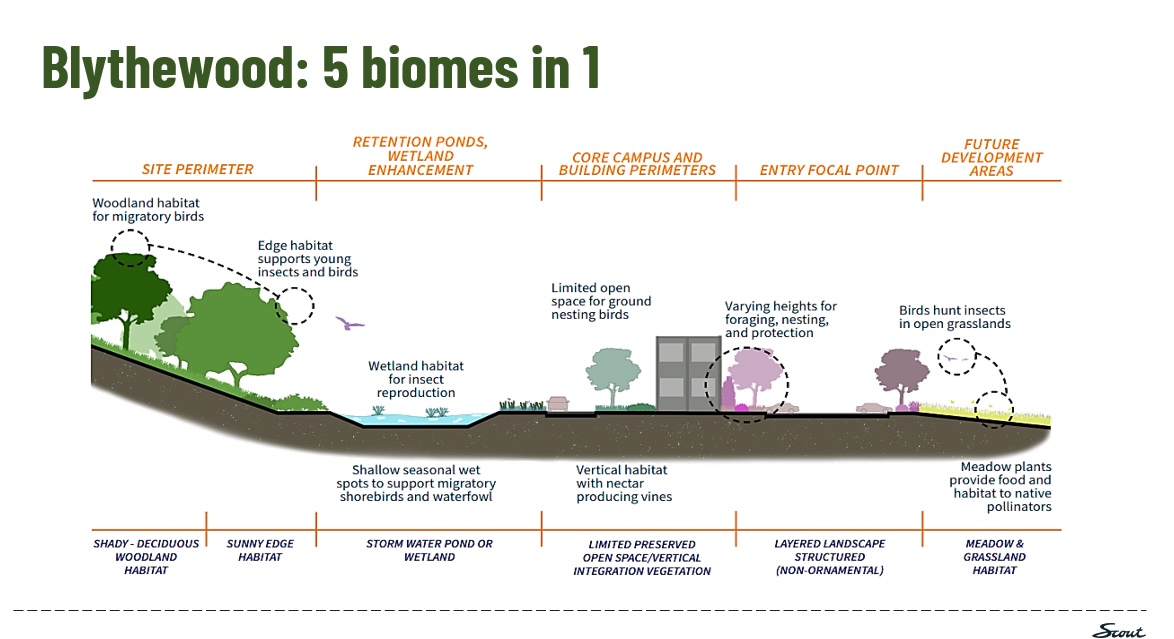
To manage a property of this magnitude, Siron explained that Scout has divided the 1,100 acres into five dedicated ecological zones, or “biomes,” that she said are engineered for specific environmental functions.
- The site perimeter areas will be restored with dense deciduous woodlands along the property borders to insulate adjacent roadways and neighborhoods. County-partnered buffers along Blythewood Road already feature fresh irrigation, native trees, walking paths, and quiet sitting benches across from the Cobblestone Park neighborhood. Additional buffers will continue toward Community Road as state road construction wraps up.
- The wetlands and stormwater basins include five large stormwater retention ponds that have been engineered to capture and filter campus runoff before it reaches the aquifer. These areas are being planted with native aquatic grasses and wetland vegetation, establishing vital breeding grounds and food sources for amphibians, insects, and wading birds.
- The campus core and building perimeter include the area surrounding the production facilities and Scout Motors Drive. Landscaping there will remain carefully curated. Plantings will emphasize low-growing, drought-tolerant native shrubs to provide ground-level animal refuge, while deliberately avoiding tall canopy clusters that might inadvertently steer flying birds into reflective architectural glass.
- The entryway and I-77 focal point is an 18-acre signature gateway where Community Road meets Scout Motors Drive. Visible to travelers along I-77, this landscape will feature multi-layered swaths of native big bluestem grass, native hydrangeas, and specimen trees. Architectural downlighting will illuminate ground signage while keeping night skies dark to prevent disorienting nocturnal migratory birds.
- The building pads for future development are designed for eventual factory expansion and will be seeded with temporary native ground cover and pollinator species, ensuring interim soil stabilization without establishing critical wildlife nesting sites that would face future disruption.
Living Test Bed
The Scout Training Center, which opened its doors in April, is the initial testing ground for these ecological concepts and the broader landscaping approach, according to Siron. To that end, what she refers to as a “living test bed” is already preparing for its next major upgrade during the upcoming fall planting window in late October and early November, weather permitting.
“We were initially adding more than 300 new shrubs and trees to enhance this already landscaped area, but I was recently asked to enhance the enhancement,” Siron said with a smile. “Now we’re planting closer to 520 new plants just around the training center this fall.”
Blueberry Trail
Visitors walking the newly installed perimeter trail at the training center will soon notice sweeping meadow grasses on the slopes leading toward Scout Motors Drive, expanded pollinator gardens bursting with native blooms, and broadened wetland marshes designed to purify stormwater runoff. On the facility’s southern side, Siron said Scout has installed a public blueberry grove containing more than 100 blueberry bushes, inviting trail-walkers and employees to pick fresh berries during their walk.
Native Flora Volunteering
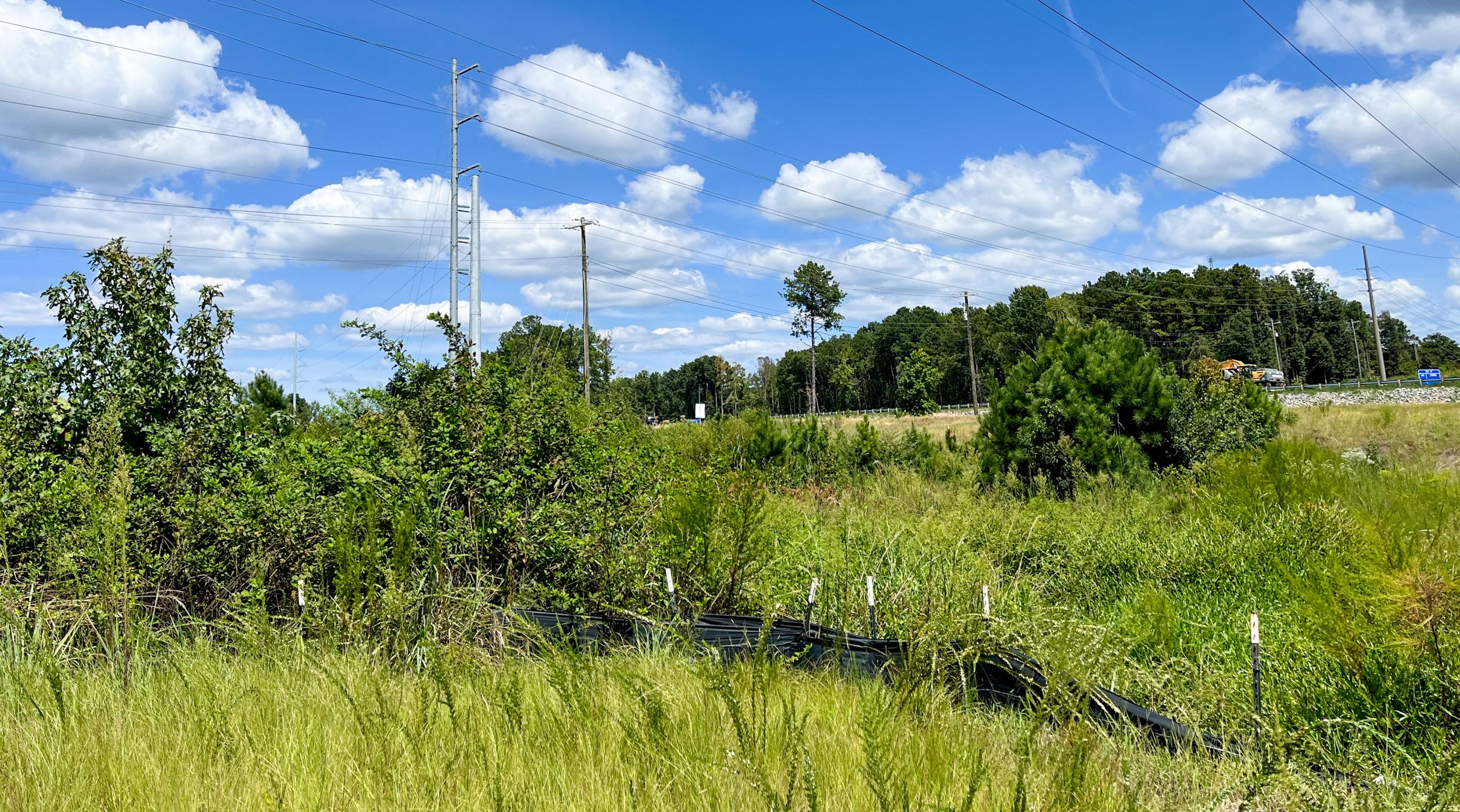
Beyond formal landscaping, nature is already demonstrating its own resilience across the interior rolling hills of the Scout property. Siron, who frequently walks the graded terrain armed with the iNaturalist field identification app, reported that native flora is voluntarily returning in abundance.
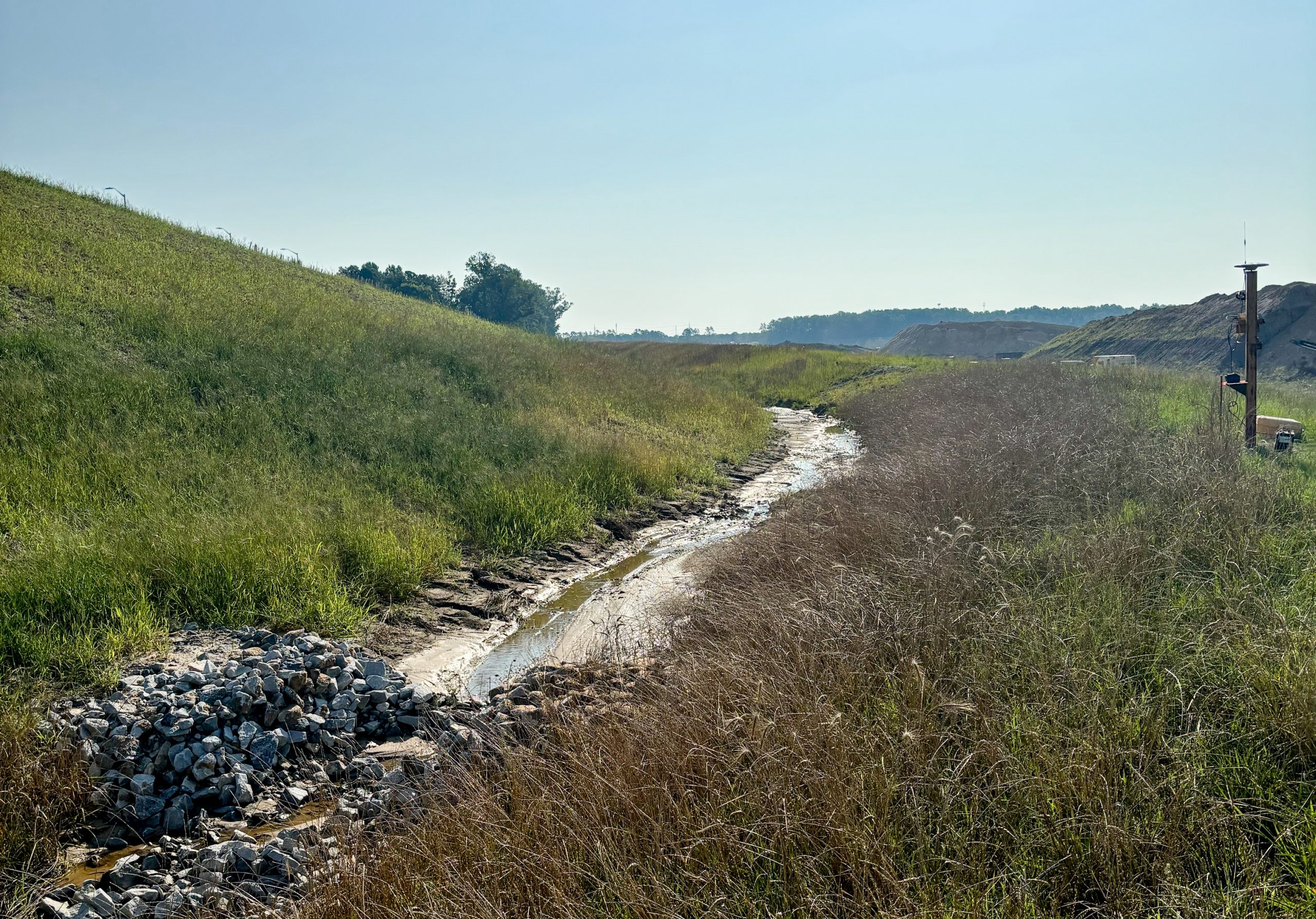
“Native black-eyed Susans, indigenous ferns, and young loblolly pines are actively recolonizing stabilized drainage berms alongside state conservation seed mixes,” Siron said.
Grazing Goats
To sustainably manage the property’s steep retention slopes without relying on gas-powered machinery, Siron is even exploring innovative maintenance practices, including seasonal targeted grazing by goat herds—a natural weeding solution recently tested in the Town of Cayce.
While Scout continues to conduct early vehicle validation and crash testing this year ahead of planned customer deliveries in 2028, Siron said the full landscape transformation will gradually unfold along with road and interchange upgrades being made by the Department of Transportation.
If all goes as planned, when the fall planting window opens, Blythewood residents should begin to see the first tangible evidence that the 1,100 acres of scraped earth is being restored into a thriving, permanent woodland sanctuary.