

Scout Seeks Recovery from Three Contractors
BLYTHEWOOD – Scout Motors has denied responsibility for damage that William and Barbara Shives claim was caused to their home and surrounding property by construction and blasting. Scout also seeks reimbursement against three contractors if the company (Scout) does not prevail in the couple’s lawsuit.
In an answer and third-party complaint filed Oct. 2 in Richland County’s Court of Common Pleas, Scout requests that the Shiveses’ lawsuit be dismissed. The third-party complaint also seeks to bring Evans General Contractors LLC, Elevate Drilling & Blasting LLC, and Strack into the court case.
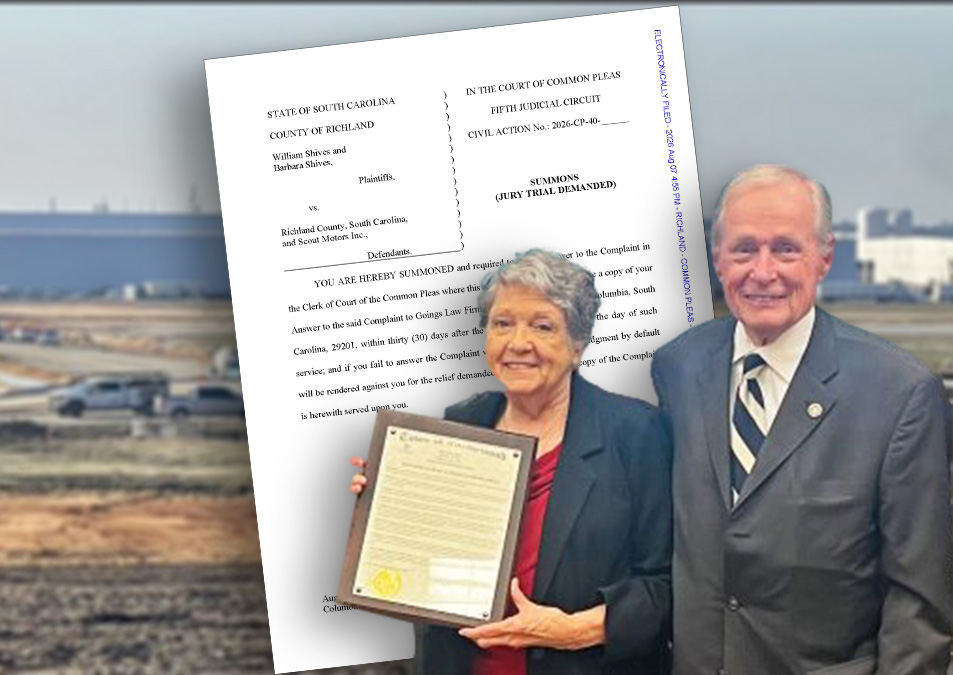
The Shives filed suit against Scout and Richland County in August, alleging that construction and blasting at the Scout site forced them to move from their home and property.
Scout’s filing acknowledges, “upon information and belief,” that William Shives is 92 and Barbara Shives is 84, but disputes numerous allegations in the Shiveses’ complaint, denying that the Shives are entitled to the relief they seek.
Scout’s claims against the contractors do not concede that the Shiveses’ property was damaged by work at the site. Instead, Scout argues that if the allegations are proven and the company is held liable, the contractors should pay the resulting costs.
“In the event that Defendant is found liable to Plaintiffs, which is denied,” the filing states, Scout is entitled to reimbursement or a contribution from the contractors toward settlements, judgments, attorney fees and other expenses.
Scout claims in the filing that the three companies bear different responsibilities. According to Scout’s third-party complaint, Evans organized certain activities at the construction site and designed and oversaw that work. Strack was involved in and oversaw blasting activities, as was Elevate.
The company describes the site involved in the case as approximately 1,570 acres.
Scout repeatedly acknowledges in its answer that blasting occurred through subcontractors. It also admits that construction activity, including blasting, causes noise and vibration at the site.
However, Scout denies the allegation that dust, noise and vibration were “persistent” or entered and pervaded the Shiveses’ property.
The company also acknowledges that using high explosives to blast rock near occupied residential properties is “a potentially dangerous activity,” while denying the remaining allegations in that paragraph of the Shiveses’ complaint.
In answering the couple’s allegations concerning stormwater runoff, Scout denies that the activity it conducted generated large volumes of sediment-laden runoff.
Scout also acknowledges in its answer that, upon information and belief, Richland County owns the construction site, held the permits under which work was conducted and “authorized, directed, and retained control over certain of the activities at the Site.”
Scout’s accused three of the contractors of negligence, breach of warranty, equitable indemnification, contractual indemnity and breach of contract.
Citing negligence, Scout alleges that each contractor owed the company a duty to perform work carefully and properly. If the Shiveses’ allegations are true, Scout contends, the contractors breached those duties.
The breach of warranty claim similarly alleges that the contractors promised, expressly or implicitly, to provide work and services suitable for their intended purpose.
As for its equitable indemnification claims, Scout asks that the contractors cover any money the company might be ordered to pay the Shiveses, any settlement payments, and expenses incurred investigating and defending the case.
Scout alleges that its contracts with the companies required them to comply with contract documents, building codes and industry standards, including “not damaging or otherwise harming surrounding properties.”
The filing also claims the contracts with the contractors required them to supervise their work, obtain insurance and defend and indemnify Scout for damage caused by their work.
Alongside its denials, Scout raises numerous defenses to the Shiveses’ lawsuit. Those include arguments that the claims are barred by the applicable filing deadline, that other parties caused any damage, and that the Shiveses may have failed to take steps to limit their losses.
Scout also argues that any judgment against it should reflect only the fault attributable to the company. It challenges the couple’s demand for punitive damages and wants applicable limits placed on such awards.
An accompanying summons directs the three contractors to answer Scout’s third-party complaint within 30 days after service, excluding the day of service. It warns that failing to respond could result in a default judgment for the relief Scout requests.