

Polen: County Officials Don’t Trust how Blythewood Spends its Money
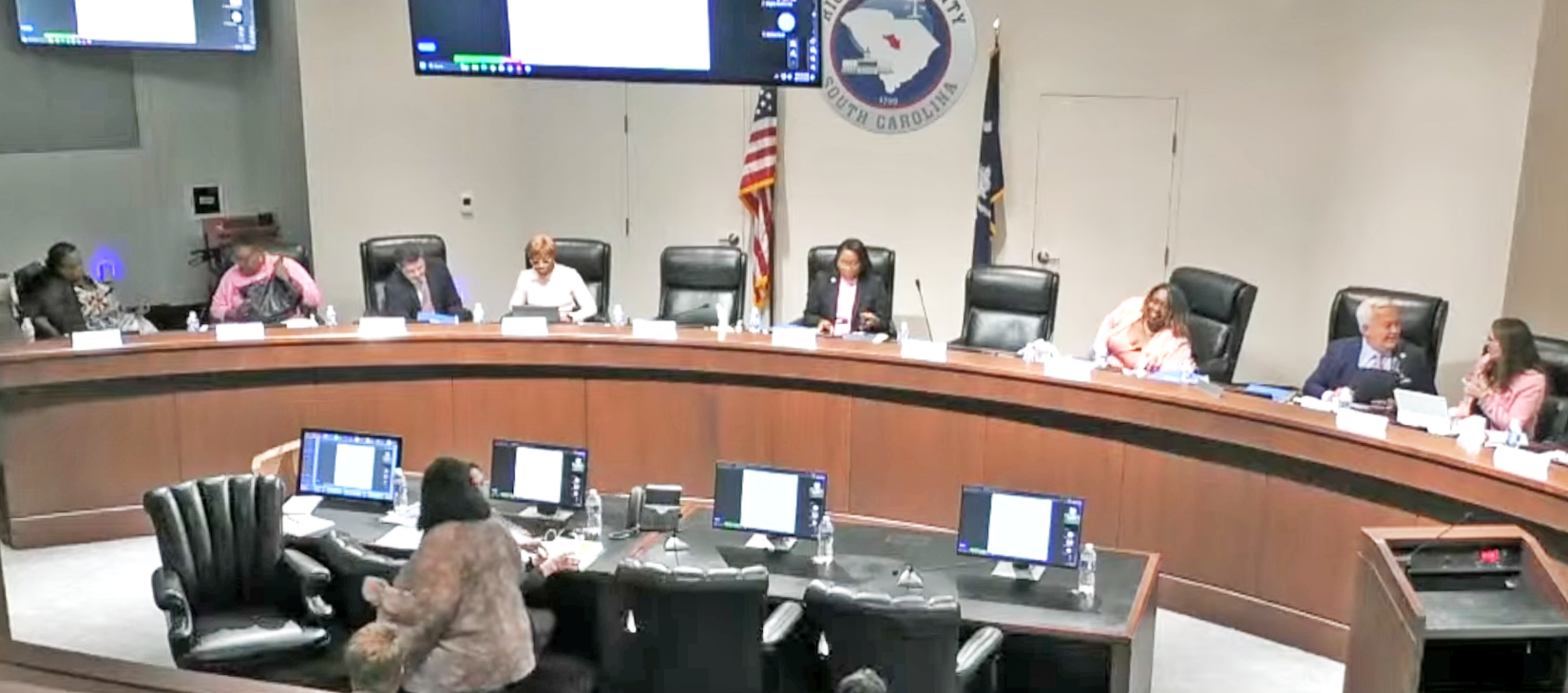
BLYTHEWOOD – On Oct. 21, Richland County Council took its first vote to approve placing Blythewood’s 3% share of future Scout revenue in a county-controlled capital improvement fund instead of paying it directly to the town as previously agreed.
In the Master Agreement Governing the Scout Motors Multicounty Park between Richland and Fairfield counties, which was finalized on July 11, 2023, the County agreed to give 3% of Scout’s annual tax revenue directly to the Town of Blythewood. According to a county official, that percentage was estimated to provide about $70,000 annually to the Town.
On page 127 of the Master Agreement, it states: “Because a portion of the property located in the Park is geographically situated in the Town of Blythewood, South Carolina (‘Town’), the Counties have obtained the consent of the Town prior to the creation of the Park, as evidenced by the Town’s acknowledgement to this agreement.”
On page 129, Section 3.03, the agreement states, “3% shall be distributed to the Town.”
Town Manager Doug Polen said neither of the Town’s two representatives on county council— Vice Chair Derek Pugh and Councilwoman Gretchen Cooper—nor anyone from the county notified the Town before or after the vote was taken. Polen said he learned about the proposed amendment from a reporter.
The agenda item did not indicate that it pertained to the Town.
The agenda item (page 8 of the agenda) states: “Authorizing an amendment to the revenue distribution method under the master agreement governing the Scout Motors Multicounty Park and other related matters.”
On page 471 of the Oct. 20 County Council agenda packet, the amendment states, “the terms of the Master Agreement permit each county to unilaterally amend the provisions of the Master Agreement relating to the internal distribution of revenues received by the county through the adoption of an amendment.”
The amendment goes on in Exhibit A to identify the Blythewood 3% revenue as being the target of the amendment.
In 2023, county officials negotiated with town officials to accommodate zoning and other measures for the arrival of Scout.
Polen told The Voice that he expressed displeasure to county officials and plans further discussions about the proposal.
“If the county retains control of the money,” Polen said, “the town should have approval over its use, and spending should be restricted to projects within Blythewood’s municipal boundaries.”
“That money was originally going to the town,” Polen said. “If the county wants to retain it as a capital improvement fund, which I don’t think is the way it ought to be, it needs to be only for projects physically within the Town of Blythewood, and it needs to be approved by the Town of Blythewood.
“Three years ago it was the town gets 3%, and now it’s the town gets three percent put into a bank account owned by the county,” he said.
In an email to the mayor and council, Polen said questions remain about the town’s rights under the original arrangement. While he said his understanding is that the county has authority over its fee-in-lieu-of-taxes (FILOT) revenue, he said he had not determined whether previous commitments established an enforceable obligation to Blythewood.
“Yes, it is the county’s property tax money, but, you know, were promises made? Were contracts signed?” Polen said.
Polen said he discussed the proposal with Town Councilman Rich McKenrick, whose response, he recalled, was, “That’s our money.”
“He said that was always supposed to be our money, and of course, that’s what it reads in the original agreement, was 3% just goes to the town,” Polen said.
If the county proceeds with a capital improvement fund, Polen said its rules need to clearly define both where the money can be spent and who decides how it is used.
He also objected to the possibility of a decision-making committee suggested by county officials that would be dominated by county representatives, describing a hypothetical arrangement in which county council members would hold seven seats and he would hold one.
Polen said his frustration increased when county officials conveyed concerns about how the Town might spend the money.
“The county didn’t feel like they could trust the Town with the money,” he said.
A county official disclosed to The Voice that council members had discussed in executive session whether the Town of Blythewood would responsibly spend the funds.
Polen pointed to the town’s financial reserves, which he described as equivalent to four years of its annual budget, in disputing the suggestion that Blythewood could not responsibly manage its revenue.
He also acknowledged the benefits Scout and county infrastructure investments are expected to bring to the area, including road improvements and sewer capacity.
“I have no doubt that Scout is a benefit to the town,” he said.
But those investments, he said, should be accompanied by cooperation between the governments.
Polen said he hopes further discussions will produce an agreement that protects the town’s interests.
“I will defend the town’s rights strongly and vocally,” he said.